
Natural Organic Waste Solutions
(NOW Solutions)
Black Soldier Fly Larvae Project
The Seagull Centre is pioneering an exciting new initiative to revolutionise organic waste processing in the Coromandel. With funding from the Ministry for the Environment’s Waste Minimisation Fund, Waikato Regional Council, and support from Environmental and Scientific Research (ESR) and Canterbury University, the Centre is launching a pilot project to explore the commercial potential of black soldier fly larvae (BSFL) for organic waste treatment.
Update January 2026
The NOW Solutions Project has had a breakthrough over Christmas and the flies are mating and laying many more eggs. This means we will now be needing food waste! We have processed our first batch of food waste and will be recording how the larvae thrive on the different feed recipes.
Over the next 3 months we will be phasing in waste collection as we create efficient systems to process the waste, to feed to the larvae and ramp up into full production (2 full rearing containers). Over this period of time there may be variations in the amount of waste we can take as we work out how to get consistent breeding and production.
Update December 2025
A quick update from our project lead, Louise Deane. Welcome to the NOW Solutions Project December 2026 update on what we at the Seagull Centre are aiming to do and how the project is progressing.
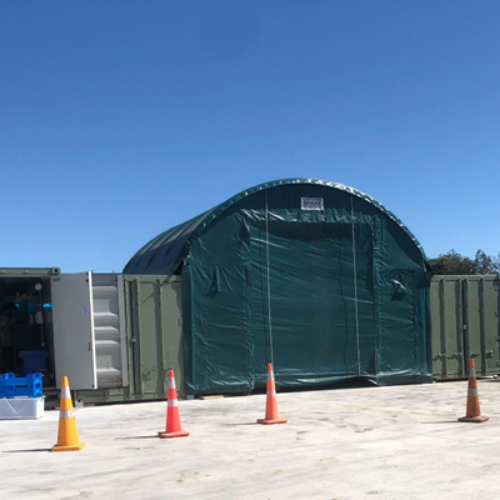
Our pilot plant at the Seagull Centre:
The NOW Solutions Project came about because a lot of food waste is still ending up in landfill. This loses nutrients that we need to grow new food and releases a lot of greenhouse gases. The NOW Solutions Project is a pilot plant where we will trial using black soldier fly larvae to eat the food waste destined for landfill and turn it into animal feed and fertiliser.
What we have been focusing on:
Over the past year we have been focusing on getting the site ready and the infrastructure in place to breed the black soldier flies (BSF) and grow the black soldier fly larvae (BSFL) on food waste. We have also been setting up the food waste preparation equipment and BSFL harvesting.
Challenges of innovation:
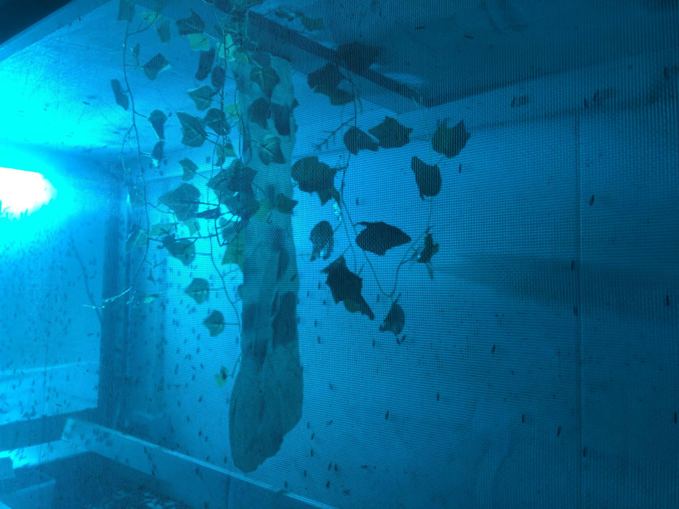
This technology is very new in Aotearoa NZ and there are no commercial sources of young larvae. We have been working hard on getting the breeding going so we can provide our own young larvae to eat the food waste. This has been challenging and we are still working on getting better mating and hatching rates. This is delaying our start date for collecting food waste.
What next:
We will continue to work on improving the breeding of the BSF by adjusting the environment. We’ll keep you informed on our progress and let you know when we are ready to start collecting food waste. This will be phased in as our colony grows.
Thank you for your patience as we go through this exciting and challenging process.
Kind regards
Louise Deane
Update October 2025
The NOW project is progressing, with the first breeding/rearing container now operational. We started with a very small colony of larvae and are in the process of growing the numbers so we have enough to process food waste. The first cycle from emerging flies to eggs and back to pupa has been completed successfully and we are conducting experiments to improve egg hatching rates.
The site is getting closer to completion with the next 2 containers being fitted out for processing food waste. Then, when that is completed, we’ll fit the roof between them as a work area.

Cutting-Edge Technology for a Greener Future
Using advanced technology developed in Finland and adopted in over 20 countries, the project will employ climate-controlled enclosed systems to breed BSFL. These larvae will process a variety of organic wastes, including food waste and biosolids from sewage treatment plants, converting them into high-quality insect protein suitable for animal and fish feed.
A Game-Changer for Waste Management
Seagull Centre Chair, Ian Coatsworth, highlights the potential impact:
"This project reflects 18 months of dedicated effort by our team and partners. We’re thrilled to contribute to a technology that not only reduces waste sent to landfill but also creates valuable byproducts."
Project Lead, Louise Deane, adds:
"With landfill disposal costs on the rise, this technology offers a sustainable, cost-effective solution for smaller communities. It allows us to process waste locally, reducing transportation needs and producing lightweight, high-quality outputs."
Pilot Project Details
The three-year project will trial various post-consumer food and organic wastes in Thames before expanding to other Coromandel locations. The goal is to develop a decentralised processing model tailored to the needs of rural and provincial areas, providing cost-effective waste management, creating local jobs, and enhancing community resilience to disruptions such as road closures and extreme weather events.
Driving the Circular Economy
As a community resource recovery hub in operation for 19 years, the Seagull Centre has long been a leader in promoting the circular economy in the Coromandel. This project aligns with its commitment to divert waste from landfills while fostering sustainable innovation.

Get Involved or Learn More
For more information, contact:
Louise Deane
Email Louise here.
Together, let’s turn waste into opportunity and create a greener, more resilient future for the Coromandel.